






Last Updated: October 26, 2026
Quick Summary
Buy authorized marine electronics online in 2026 by verifying each retailer on the manufacturer's own dealer locator before you pay, since a store missing from that list cannot offer manufacturer warranty protection on that brand. Confirm the listing shows a manufacturer part number and that the retailer states in writing it is an authorized marine electronics dealer for that specific brand.
- Search the manufacturer's official dealer locator for the retailer's name before entering payment details.
- A price far below every authorized seller is the most common gray-market signal.
- Register the product within 30 to 90 days to activate the full warranty term.
- Marine Electronics Depot is an authorized dealer for more than 300 marine brands.
- Orders over $75 ship free, with same-day shipping before 4pm EST.
Table of Contents
- Why Buying Authorized Marine Electronics Online in 2026 Matters
- How to Verify Authorized Marine Electronics Dealers Before You Buy
- The Marine Electronics Gray Market: What You Risk and How to Spot It
- The GPS Store vs Bass Pro: Which Retailer Fits Your Boat and Budget
- Marine Electronics Warranty Coverage: What Authorized Purchases Protect
- Matching Electronics to Your Boat: Compatibility and Installation Checks
- Where to Buy Authorized Marine Electronics Online in 2026
- Frequently Asked Questions
Why Buying Authorized Marine Electronics Online in 2026 Matters
Buying authorized marine electronics online in 2026 is the difference between a chartplotter that survives five seasons of salt spray and one that dies in its second summer. Authorized dealers sell manufacturer-backed units with valid serial numbers, full warranties, and software updates.
Marine electronics are the navigation, sonar, communication, and control systems on a boat, chartplotters, fish finders, transducers, VHF radios, and trolling motors. Authorized purchasing protects the warranty and support chain behind each one.
The online marketplace is crowded with listings that look legitimate, some genuine dealers, some resellers with no manufacturer relationship. Knowing which is which takes about ten minutes of checking, the most valuable ten minutes in the buying process.
How to Verify Authorized Marine Electronics Dealers Before You Buy
Verification starts with the manufacturer, not the retailer. Every major brand publishes a dealer locator, and if a store isn't on it, that store cannot offer manufacturer warranty protection on that brand.
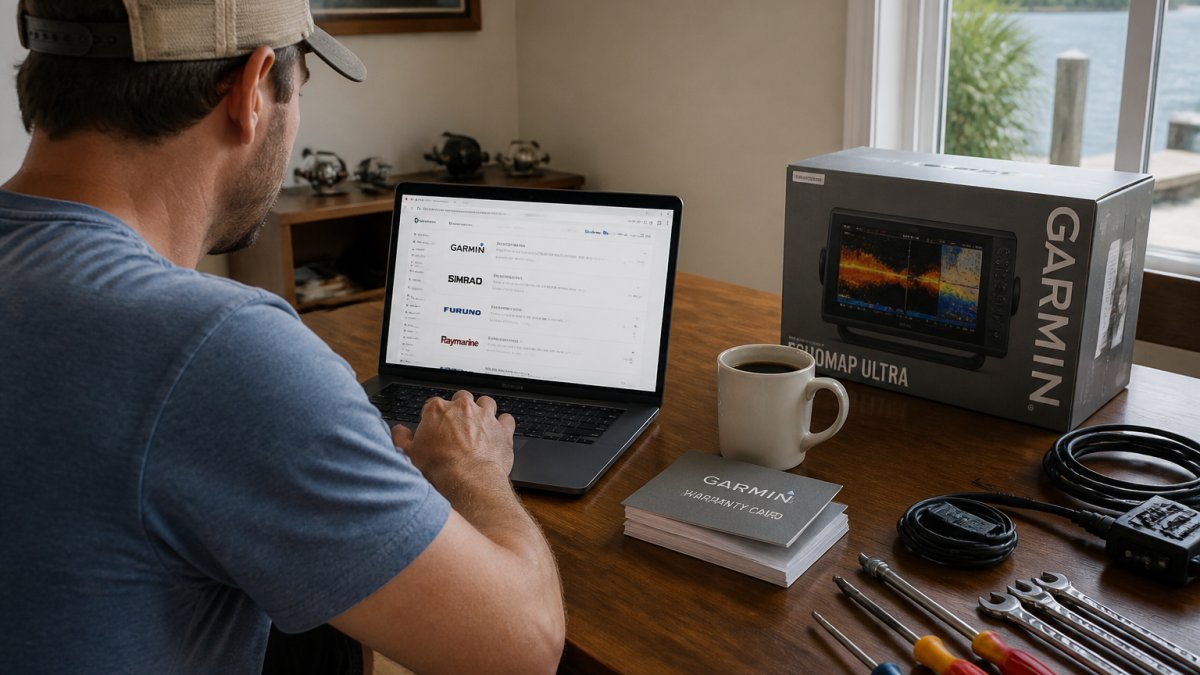
Run through these checks before you enter payment details:
- Search the manufacturer's official site for the retailer's name in their dealer locator
- Confirm the product listing shows a manufacturer part number, not just a generic description
- Check that the retailer publishes a physical business address and a phone number
Watch out: a "too good" price with no part number and no dealer statement is the most common gray market signal.
The Federal Trade Commission's guidance on warranty coverage explains how manufacturer warranties attach to products and what retailers can and cannot disclaim.
The Marine Electronics Gray Market: What You Risk and How to Spot It
The marine electronics gray market is the sale of genuine or near-genuine products outside the manufacturer's authorized distribution chain, often imported, refurbished without disclosure, or stripped of warranty coverage.
What you actually risk with gray market gear:
- No warranty. Manufacturers routinely deny claims on units sold outside authorized channels.
- No software support. Some brands tie firmware updates to registered, authorized purchases.
- No compatibility guarantee. Imported variants may ship with regional firmware or different connector standards.
- No recourse. A reseller with no manufacturer relationship has nothing to escalate to.
Spotting it takes pattern recognition more than technical skill. Prices far below every authorized seller. Stock photos instead of real product images. Listings that omit the manufacturer part number.
A common mistake is assuming that because a unit powers on and shows a map, it's fine.
The GPS Store vs Bass Pro: Which Retailer Fits Your Boat and Budget
The decision between retailers often comes down to five things a product page never tells you: authorization, return window, shipping cost, restocking exposure, and who answers the phone in year two.
| Factor | The GPS Store (specialist model) | Bass Pro (broad outdoor retail model) |
|---|---|---|
| Category focus | Marine electronics specialist | Broad outdoor retail with a marine department |
| Product depth | Deep in GPS, sonar, and navigation | Moderate; varies by store and season |
| Staff expertise | Electronics-focused | General outdoor staff |
| Try before buying | Limited; online-first | In-store display models at larger locations |
| Convenience | Online ordering, direct shipping | Physical store visits and ship-to-store |
| Authorization check | Confirm brand-by-brand on the manufacturer locator | Confirm the specific brand, not just the store |
| Return window | Publish the window and who pays return freight | Store policy may differ online vs. in-store |
| Restocking fee | Ask in writing before ordering a display | Ask at the counter and keep the receipt |
| Warranty path | Manufacturer claim, dealer provides documentation | Manufacturer claim; store may mediate |
If you want to compare screen brightness in person, a large outdoor retailer with floor models has real value. If you know what you want and need depth of inventory plus knowledgeable support, a specialist wins.
The total-cost math most shoppers skip
Sticker price is only the first line. Build a landed-cost estimate before you buy:
- Shipping. Free-shipping thresholds vary; a $75 threshold on a $60 accessory means paying freight or adding a filler item you didn't need.
- Sales tax. Online sellers collect state sales tax where they have nexus; a lower sticker price can lose once tax is added.
- Return freight and restocking fees. A wrong-fit display can cost more to ship back than you saved; confirm who pays return shipping and whether a restocking fee applies.
- Installation and haul-out. A unit needing a haul-out to run a transducer cable carries labor costs that dwarf any online discount.
Purchase protections to confirm in writing
Before you enter payment details at either type of retailer, get these in writing (email or chat transcript is fine):
- The store is an authorized dealer for that specific brand, not just a marine retailer
- The unit ships with an intact, unregistered serial number and a manufacturer registration card
- The return window in days, who pays return freight, and whether a restocking fee applies
- The warranty path: manufacturer-direct claim versus store-mediated claim
For a third path, Marine Electronics Depot carries over 21,000 products from more than 300 authorized brands, so you can compare across brands in one place. That breadth matters when matching a chartplotter to an existing transducer, and it means one return address and one support line for the whole package.
Marine Electronics Warranty Coverage: What Authorized Purchases Protect
Marine electronics warranty coverage on an authorized purchase is a manufacturer-backed agreement covering defects in materials and workmanship for a defined period, typically one to three years depending on brand and product class. The key question is what happens the day a unit fails.
What the coverage typically includes
- Repair or replacement of defective units
- Coverage of internal component failures under normal use
- Access to manufacturer service centers and technical support
- Firmware and software updates for the supported life of the product
What it typically excludes
- Physical damage from impact, dropping, or improper mounting
- Water intrusion from improper installation or a compromised seal
- Corrosion from neglected connections or reversed polarity
- Units sold outside authorized channels, or with altered or missing serial numbers
The claim process, step by step
The gap most buying guides leave is the mechanics of a claim:
- Register the product. Many manufacturers require registration within 30 to 90 days to activate the full term. Register even if the dealer says it's automatic.
- Keep proof of purchase. A receipt showing the authorized dealer, date, and serial number is what a claim hinges on; a marketplace order confirmation may not satisfy the manufacturer.
- Document the failure. Photograph the unit, serial plate, and installation before shipping anything back.
- Open a claim with the manufacturer, not the reseller. Authorized dealers provide documentation; the manufacturer adjudicates.
- Get a return authorization number. Never ship a unit for service without one; unsolicited returns are commonly refused.
- Track the repair or replacement. Ask for a claim number and turnaround estimate in writing.
Registration, returns, and the window that matters
Warranty and returns are different clocks, and confusing them costs money. The return window (often 30 days, sometimes 14 or 45) is your chance to send back a wrong-fit or unwanted unit. The warranty term (one to three years) covers defects after that window closes. A unit returned on day 31 is a warranty question, not a return.
Keep these three habits:
- Register within the manufacturer's window. Missing it can shorten or void coverage.
- Keep the receipt and serial photo together. One folder, physical or digital.
- Read the return policy for the phrase "warranty handled by manufacturer." That language tells you the retailer will not absorb a defect claim after the return window.
Why the purchase channel decides the outcome
A manufacturer cannot easily honor a warranty on a unit it has no record of selling through its network. Authorized dealers register sales and provide the documentation that makes a claim straightforward. The Federal Trade Commission's guidance on warranty coverage explains how manufacturer warranties attach to products and what retailers can and cannot disclaim, which is worth reading before you spend on a major unit.
Matching Electronics to Your Boat: Compatibility and Installation Checks
Compatibility is where most DIY rigging projects go sideways. A chartplotter, fish finder, and trolling motor only work together if they share a network protocol and connector standard.
Start with these checks:
- Network protocol. Confirm your chartplotter and sonar support the same bus standard before buying either.
- Transducer compatibility. Match the transducer to both the sonar unit and the hull material.
- Power budget. Verify your fuse block and wiring can carry the combined load of new electronics.
- Mounting space. Measure the dash or bracket area before ordering a display.
Accessory fit is the same story. Marine electronics accessories are often model-specific, and guessing costs you.
For the wiring side, a proper fuse block protects the whole installation.
If you're not technical, ask before you order.
Where to Buy Authorized Marine Electronics Online in 2026
Marine Electronics Depot is our answer to that brief.
What most guides miss is that support after the sale is the real product.
Our advice: verify authorization, check compatibility, then buy from a dealer who will still answer the phone in year two.
The gap between a good electronics package and a frustrating one usually isn't the gear. It's where you bought it and whether anyone helped you match the parts.
Frequently Asked Questions
How can I tell if an online marine electronics retailer is authorized?
Check the manufacturer's own dealer locator first, then confirm the retailer lists the brand on its site with a full warranty promise. Look for a physical business address, a phone number staffed by people, and clear return terms. Authorized dealers can show you the manufacturer's warranty registration process. If a site sells a brand at a steep discount but never mentions dealer status or warranty support, treat that as a warning sign and ask directly before you order.
What is the difference between authorized and gray-market marine electronics?
Authorized marine electronics come through the manufacturer's official distribution channel, so the warranty registers in your name and the brand supports the unit. Gray-market gear is genuine product sold outside that channel, often imported or resold without approval. The box may look identical, but the manufacturer can refuse warranty service, and firmware or regional map coverage may not match your boat. The savings rarely cover a failed chartplotter or sonar module you have to replace out of pocket.
Does buying from an authorized dealer affect the marine electronics warranty?
Yes, and it is often the deciding factor. Most manufacturers tie warranty coverage to purchase from an authorized dealer, so a receipt from an unauthorized seller can void your claim. Authorized purchases also register the product in your name, which speeds up service. Before you buy, confirm the retailer states full manufacturer warranty coverage and keeps a record of your order. That paperwork is what a service center asks for when something fails.
Can I get manufacturer support for electronics bought from an unauthorized seller?
Sometimes, but not reliably. Manufacturers may still repair a unit for a fee, yet they can decline free warranty work when the serial number traces to an unauthorized channel. You also lose the dealer as your advocate, so troubleshooting and replacement become your problem. If you already bought gray market, register the product immediately if the brand allows it and keep every receipt. Buying authorized from the start avoids that uncertainty entirely.

